This Phone Brand Shouldn't Exist
How Carl Pei built a smartphone brand from zero in a market dominated by Apple, Samsung, and 15 Chinese brands.
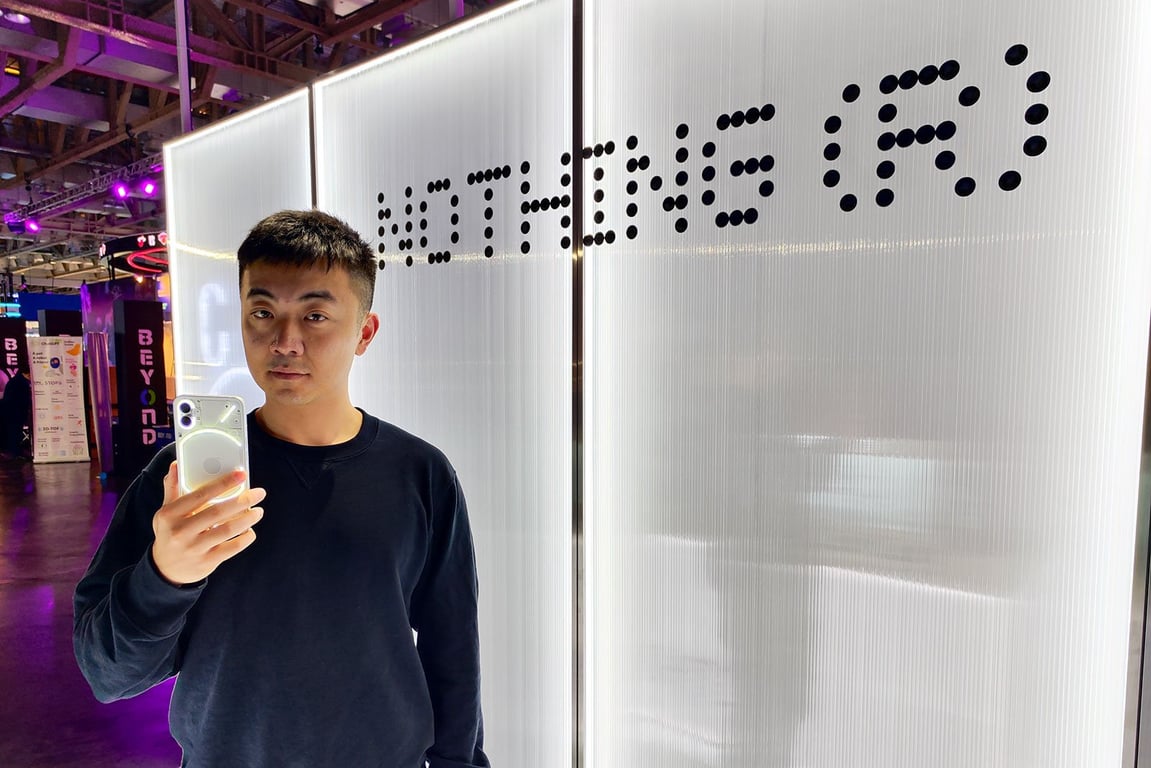
How Nothing earned 2% of India’s smartphone market in 4 years — in a market dominated by Apple, Samsung, and 15 Chinese brands
There are two ways to disrupt the smartphone market: create a technology shift (Apple’s touchscreen) or ride a market wave (Samsung’s 4G push). Both demand years of R&D and serious capital that a new brand simply doesn’t have.
What’s left? Offer the most value-for-money phone. Except, 15+ Chinese brands with optimized supply chains are already doing exactly that — and they share factories through BKK Electronics, which controls 45% of India’s smartphone market.
Nothing, founded in 2020 by Carl Pei (co-founder of OnePlus), found a third path. They captured 2% of the Indian market by refusing to compete on specs entirely. Here’s how.
2%
Indian Smartphone Market Share (4 years from zero)
The Old Way: Specs-Driven Commodity Competition
For the last decade, smartphone brands competed on a single dimension: the spec-to-price ratio. More megapixels, faster processors, bigger batteries — all at the lowest possible price. Chinese brands (Xiaomi, Realme, Poco, OnePlus) optimized global supply chains to deliver maximum specs at minimum margins. The result was a race to the bottom where every phone looked identical from the front, and brand differentiation collapsed.
⚡ The Incumbent Playbook
The New Way: Design-First Identity Branding
Nothing doesn’t compete on specs — they compete on design and identity. The transparent back with Glyph Interface LEDs makes the phone instantly recognizable. It’s a conversation starter. A fashion statement. A tribe signal. In a world where every phone looks the same from the front, Nothing made the back of the phone interesting again.
🚀 The Disruptor Playbook
How Nothing Did It
Proof of Concept via EarbudsNo manufacturer would build phones for an unknown brand. So Nothing launched Ear (1) earbuds first — lower capital requirement, shorter production runs. When 1,00,000 units sold in 2 months, it proved demand AND manufacturing capability. BYD China signed on to manufacture Phone (1).
Design as the MoatThe transparent back, Glyph Interface, dot-matrix font — these cost less to innovate on than a flagship camera sensor, but create more visible differentiation. It’s the same playbook Apple used with the MacBook Air: win on identity, and customers will pay a premium for the association.
Mid-Price Anchor StrategyPhone (1) at ₹32,999 in 2022, Phone (2) at ₹45,000 in 2023 — build brand credibility in mid-premium where design matters most. No one buys a flagship from a brand they don’t trust yet. Stay in mid-premium until the brand earns the right to compete at the top.
CMF Sub-Brand for VolumeNothing couldn’t sell a ₹16,000 phone under the Nothing name without diluting its premium positioning. So they created CMF by Nothing — a sub-brand for budget buyers. The CMF Phone 1 at ₹16,000 captured volume without compromising the parent brand. Two reasons volume matters: 50% of India buys budget phones, and scale gives leverage with suppliers.
Community as DistributionNothing’s community of 30,000+ beta testers isn’t just free QA — it’s a distribution engine. Early adopters evangelize the brand, create unboxing content, and defend Nothing in online forums. This community generates word-of-mouth at a fraction of the cost of paid marketing.
60K Phone (2a) sold in 60 min
150% Phone (4a) vs sales target
1,00,000 Ear (1) in 2 months
“You cannot compete on specs against companies that share a parent factory with 45% market share. You compete on something they cannot copy: identity. The question isn’t ‘what phone should I buy?’ — it’s ‘what phone says who I am?’”
— Key Takeaway
Results
Nothing went from zero to 2% of India’s smartphone market in 4 years — in the world’s most competitive phone market. The Phone (2a) sold 60,000 units in 60 minutes. The Phone (4a) exceeded sales targets by 150% in its first week. The CMF sub-brand successfully captured budget buyers without diluting Nothing’s design-first positioning. The Phone (3) at ₹80,000 tested the premium segment and found the market wasn’t ready — a valuable lesson in earning the right to compete upward.
What This Means for Consumer Electronics
Nothing proves that in commoditized hardware markets, design-led differentiation creates pricing power that specs-led competition cannot touch. The phone has become a fashion accessory — and fashion is not a spec sheet business. The lesson applies beyond phones: any hardware category that has become a commodity (laptops, earphones, smartwatches) is ripe for design-led disruption.
The Next Frontier
Carl Pei wants Nothing to be a top-5 global smartphone brand within a decade — against Apple, Samsung, Xiaomi, vivo, and OPPO, each shipping 150-250 million phones a year. The harder question is whether Nothing can grow from a cult brand into a mainstream one without losing what made them worth following. The Phone (3) experiment showed the upper limit of the brand’s permission. The task now is expanding that permission — one design-led product at a time.
Want this playbook installed in your stack?
Book a free audit →Related Articles
Did you enjoy this article?
Your feedback helps us create better content.
✓ Thanks for your feedback!