Freshworks: From Chennai to Nasdaq — India's First SaaS Unicorn
How Girish Mathrubootham built a $838M SaaS company from India.
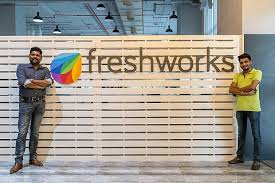
How Girish Mathrubootham built a $838M revenue SaaS company from India that competes with Zendesk, ServiceNow, and Salesforce — and won
In 2010, Girish Mathrubootham was working at Zoho when he had a personal experience that would change the course of Indian SaaS: customer support software was terrible. It was expensive, complex, and designed for enterprises with dedicated IT teams. Small and medium businesses — the engine of any economy — were stuck with spreadsheets and shared inboxes.
He founded Freshworks (then Freshdesk) in Chennai with $30,000 of his own money. The thesis: build customer support software that’s powerful enough for enterprises but simple enough that an SMB can set it up in 10 minutes. And build it from India, where engineering costs are lower, allowing the product to be priced at 1/5th of competitors.
$838.8M
FY25 Revenue · 16% YoY Growth · 75,000+ Customers · Nasdaq: FRSH
The Old Way: Enterprise Software That Hurts
Before Freshworks, customer service software was a wasteland of complexity. Zendesk was the leader but priced for US-based startups — ₹20,000+ per agent per year. ServiceNow was for Fortune 500 companies with seven-figure budgets. Salesforce Service Cloud required a dedicated admin to configure. For an Indian SMB or even a mid-market company in the US, the options were: pay enterprise prices or use spreadsheets.
⚡ The Incumbent Playbook
Related Playbooks
The New Way: Product-Led Growth for the Underserved
Freshworks flipped the SaaS playbook: make the product so simple that anyone can start using it without training or sales calls. Price it at 1/5th of competitors by building in India. Let the product sell itself through free trials and viral adoption within organizations. Then expand from customer support into IT, sales, and HR — all with the same simple, affordable philosophy.
🚀 The Disruptor Playbook
How Freshworks Did It
India’s Cost Advantage, Global PricingFreshworks’ founding insight: build the product in Chennai where a great engineer costs $30K/year vs $150K in Silicon Valley. Price the product at $29/agent/month — 5x cheaper than Zendesk’s $149 plan. This isn’t just a pricing advantage — it’s a business model advantage. Zendesk and ServiceNow can’t match Freshworks’ pricing without destroying their margins. The India-built, globally-sold model became the blueprint for Indian SaaS.
Product-Led Growth EngineFreshworks pioneered PLG in Indian SaaS: free trial → organic adoption → paid conversion. The product is designed to be used without training, support, or sales calls. A team lead tries Freshdesk, loves it, and invites their team. The team becomes dependent on it. When the trial ends, they upgrade to paid — no sales conversation needed. By FY25, this engine had grown Freshworks to $838.8M in revenue with 75,000+ customers.
From SMB to Enterprise: The AscentFreshworks started with SMBs ($5K-50K ARR customers) and systematically moved upmarket. By Q1 FY26, they landed their first $1M+ ARR deal and their two largest deals in company history. The enterprise push is supported by Freshservice for IT and the Employee Experience platform. 24,377 customers now contribute $5K+ ARR. The move upmarket is working — but it means competing directly with ServiceNow and Salesforce, which is a different game.
Freddy AI: The Monetization AcceleratorFreshworks’ Freddy AI copilot, launched in early 2025, ended the year with 2,200+ paying customers and $25M+ in ARR — doubling in one year. Freddy AI automates ticket resolution, suggests responses, and predicts customer intent. It’s a new revenue stream that also makes the core product stickier — once your customer service workflow has AI embedded, switching costs rise significantly.
Nasdaq Listing as a PlatformFreshworks IPO’d on Nasdaq in 2021 at an $11B valuation — the first Indian SaaS company to list on a US exchange. The listing gave Freshworks currency for acquisitions (Device42 for IT operations, FireHydrant for incident management) and credibility with enterprise buyers. More importantly, it proved that “built in India, sold globally” SaaS companies can generate public market returns — paving the way for the entire Indian SaaS ecosystem.
$838.8M FY25 Revenue
16% YoY Growth
75,000+ Customers
$25M+ Freddy AI ARR
$40M+ ESM ARR
24,377 $5K+ ARR Customers
“Freshworks proved that you don’t need to be in Silicon Valley to build a global SaaS company. Build in Chennai, hire great engineers for a fraction of US cost, price at 1/5th of competitors, and let the product sell itself. The playbook has since been replicated by dozens of Indian SaaS companies.”
— Key Takeaway
Results
Freshworks generated $838.8M in FY25 revenue (16% growth) with improving profitability. Q1 FY26 revenue hit $228.6M. The company has 75,000+ customers globally including Bridgestone, New Balance, S&P Global, and Sony Music. Freddy AI reached $25M+ ARR. ESM passed $40M ARR. The company landed its first $1M+ ARR deal. With a strong balance sheet and a growing AI business, Freshworks is executing the “expand from support to full platform” playbook that made Zendesk and ServiceNow into multi-billion dollar companies.
What This Means for Indian SaaS
Freshworks is the archetype for “build in India, sell globally” SaaS. The lesson: India’s engineering cost advantage isn’t about cheap labor — it’s about building a product that’s 5x cheaper than US competitors while maintaining quality, then using that pricing to capture the underserved mid-market that competitors ignored. Every Indian SaaS founder since has studied Freshworks’ playbook — from Postman and Chargebee to BrowserStack and Whatfix.
The Next Frontier
Freshworks’ biggest challenge is the upmarket push. Competing with ServiceNow and Salesforce in the enterprise requires different sales motions, compliance certifications, and product depth than the SMB game. The bet on Employee Experience (EX) — IT service management, HR, facilities — as the next growth vector will determine whether Freshworks becomes a $5B+ revenue company or stays a successful mid-market player. AI (Freddy) is the accelerator: automating tiers of support that previously required human agents.
Want this playbook installed in your stack?
Book a free audit →Related Articles
Did you enjoy this article?
Your feedback helps us create better content.
✓ Thanks for your feedback!