Who's Winning the Comedy Business? — India's Entertainment GTM Disruption
Samay Raina is taking the biggest bag home. A deep dive into the economics of Indian comedy.
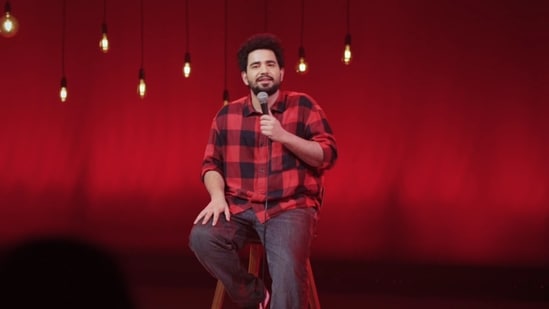
Samay Raina is taking the biggest bag home. Till when? A deep dive into the economics of Indian comedy and what the GTM playbook tells us about the creator economy
There is a running joke in stand-up circles: everyone gets paid to make the audience laugh, but the comedian takes home the smallest cut. For 25 years, Indian comedians have been trying to solve this fundamental business problem. The product (a live comedy performance) is inherently non-scalable — you cannot be everywhere at once, and you cannot delegate delivery. [1]
Then Samay Raina built India’s Got Latent and changed everything. At its peak, he was making ₹35 lakh per episode from brand integrations — not as a sponsorship, but as a media buy. He was keeping a higher percentage of a larger number than any Indian comedian in history. [2] Here’s how the comedy business evolved, and what it teaches us about platform dependency versus owning distribution.
₹35 Lakh
Per Episode Brand Integration (India’s Got Latent peak)
The Old Way: Platform-Dependent Monetization
For decades, Indian comedians had three revenue streams: live shows (highest margin, but physically limited), television appearances (mass reach, but the network took the lion’s share), and brand endorsements (lucrative, but dependent on being “hot”). In every case, the comedian was a supplier to a platform that controlled distribution and pricing. [3]
⚡ The Incumbent Playbook
The New Way: Owned Distribution + Integrated Branding
Samay Raina’s India’s Got Latent flipped the model. Instead of appearing on a TV show as a contestant or host, he created his own show on his own YouTube channel. Instead of selling ads through an agency, he sold brand integrations directly — and made the advertising part of the entertainment. Instead of relying on YouTube ad revenue (infamous for low Indian CPMs), he built a recurring revenue stream through YouTube memberships at ₹59/month. [4]
🚀 The Disruptor Playbook
How Samay Changed the Game
Recurring Revenue Independent of Brand Deals₹59 per month from YouTube memberships arrives whether or not Samay films an episode. No Indian comedian had built this before. AIB had no equivalent. Zakir Khan has no equivalent. It is the first time an Indian comedian built something that pays them without performing — the closest the industry has come to SaaS-like recurring revenue. [4]
Brand Integration as EntertainmentWhen Spinny sponsored India’s Got Latent, Samay introduced them as “Swiggy,” refused to wear their T-shirt, and read the brand brief in mockingly irreverent tone. Customers started sharing photos of their “brand new second-hand cars” on social media. The brand didn’t interrupt the show — it became the show. This allowed Samay to charge ₹35 lakh per episode as a media buy, not a sponsorship fee. The pricing structure is categorically different from anything an Indian comedian had charged before. [2]
Owned Distribution via the AppSamay built his own app for content distribution, reducing platform dependency at the margin. When YouTube demonetized or age-restricted content, the app provided a direct distribution channel to his most loyal fans. This is the same playbook OnlyFans used — own the relationship with your biggest fans. [5]
From Individual to PlatformIndia’s Got Latent became a launchpad for other comedians — Raghu Ram, Balraj, and others gained massive followings through appearances. This created a network effect: the more successful Samay made other comedians, the more they wanted to appear, the better the show got, the more viewers watched, the more brands paid. This is the platform flywheel that TV networks had — but now owned by a creator. [4]
The Moonshot Alternative — Agency ModelTanmay Bhat (AIB co-founder) took a different route after AIB dissolved: Moonshot Agency, a creative agency working directly with startups. The model generates less noise but keeps running when controversy strikes — because the company is bigger than the person. 32+ brands partnered with India’s Got Latent at ₹30-40 lakh each. The agency model compounds differently: less upside per year, but no single point of failure. [6]
₹35L Per Episode Brand Deal
20M Weekly Viewers (peak)
32+ Brand Partners
₹59/mo Membership Revenue
153M Son of Abish Total Views
₹1.5-4.5Cr Estimated YouTube Revenue
“Samay Raina proved that in the creator economy, the platform owner takes the economics. The only way to win is to own the platform. India’s Got Latent wasn’t a comedy show — it was a media company disguised as one.”
— Key Takeaway
The Economics of Comedy
The Television Era: Comedy Nights with Kapil charged ₹1-1.25 lakh per 10-second ad slot. With 72 slots per hour (12 min ad cap), each episode generated ₹72 lakh from spot ads alone. Kapil reportedly took ₹35 lakh per episode by 2016. The network kept the rest. [7]
The OTT Era: Amazon Prime platformed Indian comedians through Specials — paying once, keeping the content permanently. Every new subscriber in 2019, 2023, or 2026 watches the same special. The comedian’s work becomes a catalogue asset. The deal structure: perpetual licensing, never up for renegotiation. [8]
The Creator Era: Samay’s model generates more money and cultural impact per year. But it requires constant churn — new episodes, new integrations, new viral moments every week. One controversy and history repeats itself: brands cancel deals, videos get taken down. Tanmay’s agency model generates less noise but keeps running when things go wrong. Both models win — but on different time horizons. [2]
What This Means for the Creator Economy
The comedy business evolution mirrors what’s happening across the creator economy: the platform always wins unless you build your own distribution. YouTube takes 45% of ad revenue. Amazon takes perpetual rights. TV networks take the margin. The creators who win long-term are the ones who treat their audience as an owned asset, not a rented one. Samay’s YouTube memberships, his app, his direct brand deals — all are moves toward owning the distribution. The question is whether he can sustain the content velocity required to keep the flywheel spinning.
RaGa × Vridhi Application
This study directly informs our community building strategy. The GrowthX model (newsletter → events → paid community) mirrors what Samay built: owned distribution with increasing value layers. We can apply the same playbook to Vridhi: free intelligence reports → paid community access → GTM consulting services. The key insight: give away the analysis (these articles), charge for the application (frameworks, tools, access).
References
- GrowthX Newsletter, “Who’s Winning the Comedy Business?” — Apr 10, 2026
- India’s Got Latent — Brand integration pricing and model, sourced via GrowthX analysis
- Indian comedy industry structure — AIB, Kapil Sharma, Zakir Khan business models
- Samay Raina — YouTube Memberships, App, India’s Got Latent format
- Creator economy distribution models — OnlyFans, Substack, Patreon case studies
- Moonshot Agency — Tanmay Bhat’s post-AIB venture, brand partnership structure
- Comedy Nights with Kapil — Ad slot pricing (₹1-1.25L/slot), Kapil’s per-episode fee (₹35L by 2016), TRAI ad cap
- Amazon Prime Video India — Nitesh Kripalani on comedy strategy, perpetual licensing model