Ather Energy: ₹3,823 Cr Direct-to-Consumer EV Revolution
How two IIT engineers built Indias largest EV fast-charging network.
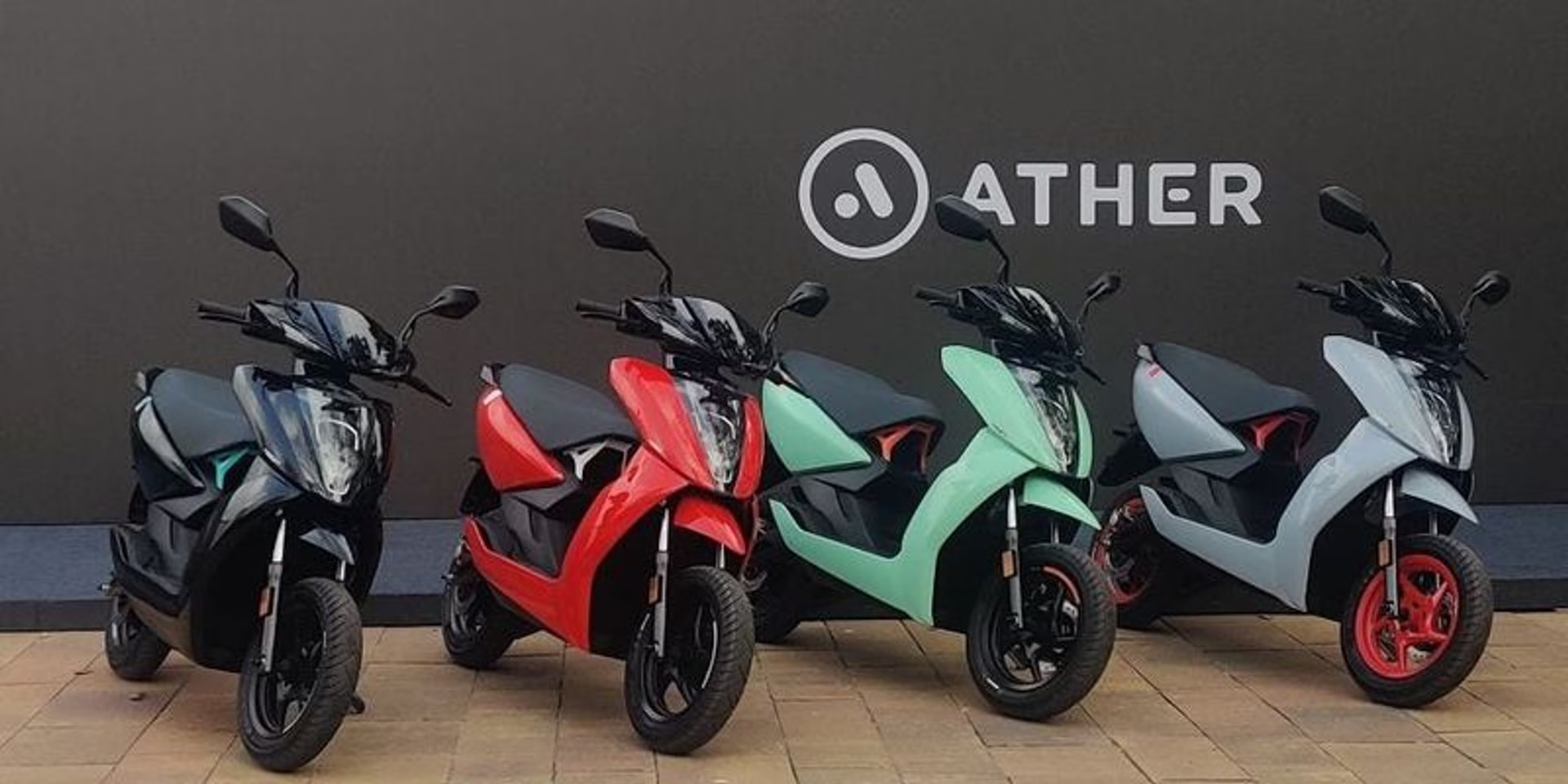
How two IIT engineers built India’s largest EV fast-charging network and forced Bajaj, TVS, and Hero to rethink 70 years of dealership-dominated distribution
In 2013, Tarun Mehta and Swapnil Jain walked out of IIT Madras with an audacious idea: build an electric scooter from scratch in India — not a converted petrol scooter with a battery slapped in, but a ground-up EV with its own motor, battery pack, and software stack. The problem: India’s two-wheeler industry was dominated by dealership networks that had been perfected over 70 years. No showroom would give shelf space to an unknown EV startup.
Their solution was radical for Indian mobility: skip dealerships entirely. Build company-owned experience centers. Create India’s largest private fast-charging network. Deliver over-the-air software updates. Own the customer from purchase to charging to service.
₹3,823 Cr
FY26 Total Income · 66% YoY Growth · 2,62,942 Units Sold
The Old Way: Dealer-Owned Distribution
For 70 years, Indian two-wheelers were sold the same way: manufacturers built vehicles, dealers sold them. Bajaj, TVS, and Hero didn’t control the customer experience — dealers did. This model created misaligned incentives: dealers preferred high-margin service over EV sales (which need less service), had no incentive to build charging infrastructure, and couldn’t explain EV technology to customers. The result: when electric scooters arrived, traditional dealers were the bottleneck, not the enabler.
⚡ The Incumbent Playbook
The New Way: Direct-to-Consumer + Infrastructure Ownership
Ather eliminated dealers, building company-owned “Ather Space” experience centers in premium locations. They invested capital into creating Ather Grid — India’s largest private fast-charging network for two-wheelers. They treated the scooter as a software product, delivering regular OTA updates that improved performance, added features, and fixed issues after purchase. The customer relationship: Ather owns it from day one.
🚀 The Disruptor Playbook
How Ather Did It
Company-Owned Experience CentersAther Space isn’t a showroom — it’s an experiential space where customers learn about EV technology, test ride scooters, and get educated. This requires capital (₹1-2 Cr per center) vs the zero-cost franchisee model. By FY26, Ather had 700 experience centers (doubled from 351), with South India achieving 23.5% market share. The trade-off: higher capex but complete control over brand experience.
Ather Grid — Charging as a MoatIn 2017, when Ather launched, public EV charging barely existed in India. Instead of waiting for the government or third parties, Ather built their own network. By FY26, Ather Grid had 6,000+ charging points across 100+ cities — the largest fast-charging network for Indian two-wheelers. Each point costs ₹3-5L to install. No traditional dealer would make this investment. The charging network is now a competitive moat that Bajaj and TVS can’t replicate through their dealer networks.
Software-Defined VehicleAther’s scooters receive OTA updates that improve performance, add features, and fix issues — something unimaginable in traditional two-wheelers. 93% of Q4 FY26 customers opted for AtherStack Pro subscription, generating high-margin recurring revenue. Non-vehicle revenue (software, charging, accessories) grew to 13% of total income — a diversifying revenue stream that pure-vehicle manufacturers don’t have.
Product-Led Growth via Rizta + EL PlatformThe Rizta family scooter drove Ather’s expansion beyond early adopters into the mass market. Market share in Middle India grew from 9.5% to 17.3% in one year, driven by Rizta demand. The new EL platform (targeting ₹1-1.25L segment) aims to capture the mass-market price point, with potential to 2-3x volume. The strategy: enter at premium, build credibility, then expand downmarket — the same playbook Tesla used.
Capital Efficiency Despite CapexDespite company-owned retail and charging infrastructure, Ather’s losses narrowed significantly: net loss reduced from ₹812 Cr (FY25) to ₹517 Cr (FY26). EBITDA margin improved from -23% to -6.7%. Adjusted Gross Margin reached 24% of total income. The “Factory 3.0” in Chhatrapati Sambhaji Nagar will add 42,000 units/month capacity, signaling confidence in demand.
₹3,823Cr FY26 Total Income
2,62,942 Units Sold (69%↑)
18.6% Market Share
700 Experience Centers
6,000+ Charging Points
93% AtherStack Pro Take Rate
“Ather proved that direct-to-consumer models can work in Indian two-wheelers despite 70 years of dealer-dominated distribution. The question isn’t whether DTC works — it’s whether they can scale it fast enough before well-capitalized legacy players replicate their advantages.”
— Key Takeaway
Results
Ather’s FY26 was a breakout year: total income of ₹3,823 Cr (66% growth), 2,62,942 units sold (69% growth), and market share expanding to 18.6%. EBITDA losses halved from ₹531 Cr to ₹257 Cr. The company is listed on BSE. Non-vehicle revenue crossed 13% of total income. The Rizta platform expanded Ather’s reach beyond early adopters, and the upcoming EL platform targets the mass market. Q4 FY26 was particularly strong: ₹1,214 Cr revenue, 83,418 units (76% growth), EBITDA margin at -2.5% — approaching break-even.
What This Means for Indian Mobility
Ather proved that DTC works in the most unlikely category: two-wheelers, where 70 years of dealer tradition seemed unshakeable. The lesson: when the product is fundamentally different (electric, software-defined, needs charging infrastructure), the old distribution model becomes a liability, not an asset. Legacy players are now forced to build their own DTC channels — but they’re doing it while protecting their dealer networks, creating internal conflict.
The Next Frontier
Ather’s challenge is scaling the DTC model beyond premium segments. The EL platform at ₹1-1.25L targets the mass market where dealer networks are strongest. Can Ather reach tier-2 and tier-3 cities where company-owned experience centers don’t make economic sense? The Factory 3.0 expansion and the EL platform will determine whether Ather becomes India’s Tesla or gets absorbed by legacy players who learned from their playbook.
Want this playbook installed in your stack?
Book a free audit →Related Articles
Did you enjoy this article?
Your feedback helps us create better content.
✓ Thanks for your feedback!