• 2 min read
Swiggy: On-Demand Convenience GTM
How Swiggy went from food delivery to instant commerce with Instamart, Dineout, and Genie.
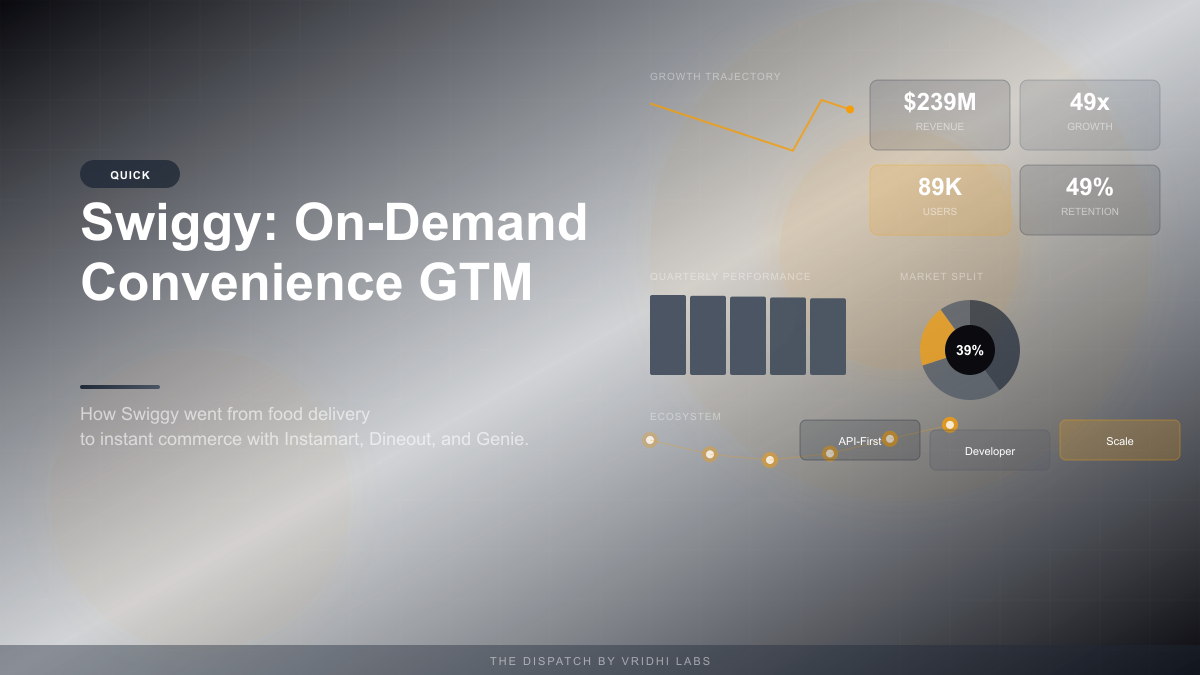
image: /images/swiggy-gtm.png
Swiggy: On-Demand Convenience GTM
The Build
Swiggy started as a food delivery platform in 2014, competing with Zomato in India’s hyper-competitive delivery market. But CEO Sriharsha Majety had a bigger vision: instant commerce.
GTM Strategy
Phase 1: Food Delivery (2014-2019)
- Differentiator: Own delivery fleet (vs Zomato’s marketplace model)
- Growth hack: “Swiggy Access” — cloud kitchens near demand clusters
- Retention: Swiggy Super (free delivery subscription)
Phase 2: Instant Commerce (2020-2022)
- Instamart: Grocery delivery in 15-30 minutes
- Play: Convert food delivery users to grocery (same behavior, different category)
- Result: Instamart became 50%+ of orders by volume
Phase 3: Full Stack (2023-Present)
- Dineout: Restaurant table booking (acquired)
- Genie: Anything-delivery service
- Swiggy One: Unified subscription (food + grocery + dining)
Key Metrics
| Metric | Value |
|---|---|
| Monthly Orders | 100M+ |
| Cities | 580+ |
| Restaurant Partners | 200,000+ |
| Delivery Partners | 500,000+ |
| IPO | 2024 (BSE/NSE) |
GTM Lessons
- Own the supply: Swiggy’s fleet gave them control over delivery experience
- Bundle behavior: Food → Grocery → Anything (same logistics, different items)
- Subscription lock-in: Swiggy Super reduced churn by 40%
- Local-first: Expanded city by city, not nationally at once
What Breaks
- Unit economics: Still not profitable (blended take rate ~22%)
- Driver retention: High churn in delivery partner base
- Zomato competition: 50/50 market share, race to bottom on pricing
Related Playbooks
image: /images/swiggy-gtm.png
Last updated: June 2026
Want this playbook installed in your stack?
Book a free audit →Related Articles
Meesho: Social Commerce at Scale
How Meesho built India's largest reseller network and became a category creator.
Zomato: From Food Discovery to Blinkit
How Zomato pivoted from restaurant discovery to quick commerce with Blinkit acquisition.
BookMyShow: Entertainment Platform
How BookMyShow dominates India's entertainment ticketing.
Did you enjoy this article?
Your feedback helps us create better content.
✓ Thanks for your feedback!